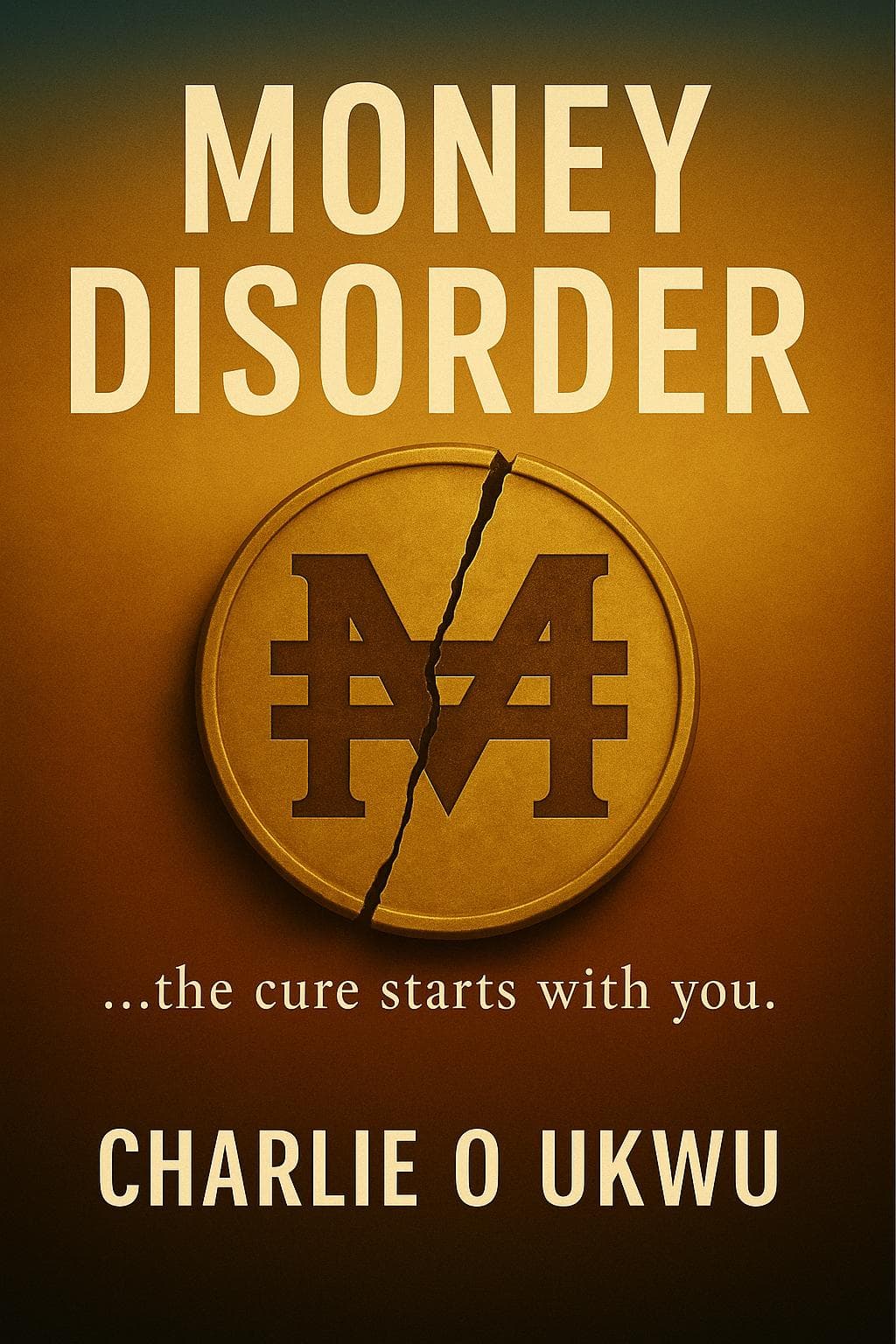
A common misconception is to look for and use money as a universal solution to life's problems. Fundamentally, it is only a tool of exchange. At best, money enables solutions, only after you have done research, analysis, and concluded courses of action. At worst, money masks underlying issues or problems that eventually grow to become too large to ignore. Without knowledge, wisdom, maturity, the right mindset, and the right actions, money does not solve problems—it exposes them. An example crystallizes the preceding explanation.
A struggling mechanic, Emeka, won M5 million in the state lottery. His life seemed to change overnight. He helped friends, bought luxury cars, and invested in businesses he did not fully understand. Yet within three years, the money was gone. The stress of sudden wealth without preparation, damaged his relationships and left him worse off than before. Emeka's real problem was never a lack of money; it was a lack of readiness. The money did not heal him—it revealed the hidden unresolved issues in his character, judgment, and vision. Emeka's predicament defines what I call money disorder: the mishandling of money due to an underlying lack of readiness. When money arrives out of order—before a person is prepared for it—the consequences can be devastating, whether that person is struggling to survive or sitting on mountains of wealth.
The concept of readiness is at the heart of this book. It is a unique, personal quality—difficult to define precisely because it varies from one person to another. I also use the term JNSQ (Je ne sais quoi, or “I don't know what”) to describe it. JNSQ is that essential “something” that makes an individual capable of handling resources wisely. It is that foundation that must be in place to support true success, impact, and fulfillment. It is that set of preparation or state of readiness that makes sure that whatever goals you set for yourself is accomplished. Money Disorder affects both economic groups of society: the have-nots, presented in Part 1 of the book, and the haves, discussed in Part 2. The scope of Part 1 of the book includes those who lack sufficient money to do what they want, and the two types of money disorder that afflicts them:
Throughout Part 1, the stories, reflections, and analyses illustrate how these disorders play out in everyday life, often trapping individuals in cycles of disappointment and dependence. The underlying message stays constant: without readiness, no amount of money will bring lasting change. Part 2 moves the spotlight onto the haves—those with more than enough money, often much more. Here, the problem shifts from scarcity to excess. While it may seem that the have-nots and the haves live in different worlds, the root issue is the same: a misplaced faith in money as the ultimate answer, rather than the development of JNSQ—the readiness to steward resources wisely and responsibly.
The purpose of Money Disorder is not simply to critique our culture's obsession with wealth. It is to offer a pathway out—to challenge readers to focus first on building readiness. Whether you find yourself hoping for your first breakthrough or managing an abundance of resources, the call is the same: develop your character, sharpen your wisdom, cultivate your vision. When JNSQ is in place, money serves its rightful role as a tool, not a master. Without readiness, even great fortunes can become instruments of personal and societal harm. This message is especially urgent for young people, who may erroneously believe that success equals wealth. True success comes from the internal strength to wield resources—not the mere possession of them. If you are a young person, hear this clearly: money is not the measure of your success. Readiness is. When you focus on developing JNSQ and readiness, the money you need will come—and when it does, it will not master you. You will master it.
This book is a call to shift your focus. Not toward chasing more money. Not toward idolizing wealth or envying those who have it. But toward building yourself—your character, your wisdom, your ability to think clearly and act decisively. Toward cultivating your own JNSQ. As you read this book, remember, it is not about having more money. It is about becoming ready. And when you are ready, the money you do have will work for you, not against you.